

“I would like to obtain clarity about what really happens with my data... Why collect it? How is it being collected?”
“I am ... worried about my data being shared.”– Children's testimonies mentioned in General Comment No. 25 on children's rights in relation to the digital environment

What is DADA-TATA?
DADA-TATA is an artistic project that reflects on children's rights in the digital realm. It focuses mainly on the right to privacy and to freedom of thought which are threatened by data processing and artificial intelligence systems.
DADA-TATA project approaches these issues from an artistic perspective to create interactive works and cultural actions designed especially for children.
DADA-TATA believes that interactive art can help to 1) Disseminate and better understand children's rights in the digital environment and 2) Promote children's data and privacy literacy through artistic and creative experiences.
Objectives
Create interactive works designed especially for children that reflect on their data processing and privacy.
Organize and promote cultural actions related to children's rights in the digital environment.
Share different academic and artistic perspectives on data processing, privacy, and children's rights in the digital environment.

Why should we protect children's data?

-
DATA-POP ALLIENCE defines it as the desire and ability to constructively engage in society through and about data.
✳️ But what is literacy? And what is data?
In 2005 UNESCO defined literacy as the ability to identify, understand, interpret, create, communicate and compute, using printed and written materials associated with varying contexts. Literacy involves a continuum of learning in enabling individuals to achieve their goals, to develop their knowledge and potential, and to participate fully in their community and wider society.
Data are objects, variables, or pieces of information that can be collected, stored, and identified. Data processing involves collecting, recording, storing, analyzing, disseminating, and using data.
✳️ What is personal data?
According to UNICEF, personal data is defined as any information that relates to an identified or identifiable living individual. This includes online identifiers such as device ID, IP address, cookies, geolocation information, photos, videos, audio recordings, browser type and plug-in details, among others.
-
✅ Right to privacy
Privacy is vital to children’s agency, dignity and safety and for the exercise of their rights.
📖 Article 161. No child shall be subjected to arbitrary or unlawful interference with his or her privacy, family, home or correspondence, nor to unlawful attacks on his or her honour and reputation.
2. The child has the right to the protection of the law against such interference or attacks.
The right to privacy is essential for children to be able to think, form their own ideas and communicate freely without fear of self-censorship or manipulation. Children should be able to exercise their right to control collection of their own data and be able to decide if their data can be collected or erased since data processing could have adverse consequences on the subsequent stages of their lives.
⚠️ What threatens children's right to privacy in the digital environment?
Collection of children's data and its processing with the aim of surveillance, profiling, behavioral selection, among others by governmental, educational and health institutions, and by private companies, natural persons, among others threatens their right to privacy.
Activities done by children, their relatives, and people close to them can also threaten privacy. For example: Sharenting, when parents publish photographs or sensitive information of their children on social networks (identity, activities, location, emotions, state of health, among others).
✅ Right to freedom of thought
1. The child shall have the right to freedom of expression; this right shall include freedom to seek, receive and impart information and ideas of all kinds, regardless of frontiers, either orally, in writing or in print, in the form of art, or through any other media of the child's choice.
1. States Parties shall respect the right of the child to freedom of thought, conscience and religion.
⚠️ What threatens children's right to freedom of thought in the digital environment?
Children's data collection and processing are used for automated or Artificial Intelligence systems to decide content, filter information, among others. These automated systems can create profiles of children for advertising purposes, which could affect and influence children’s behaviors or emotions.
_________________
References:
Convention on the Rights of the Child (1989)
General comment No. 25 on children’s rights in relation to the digital environment (2021)
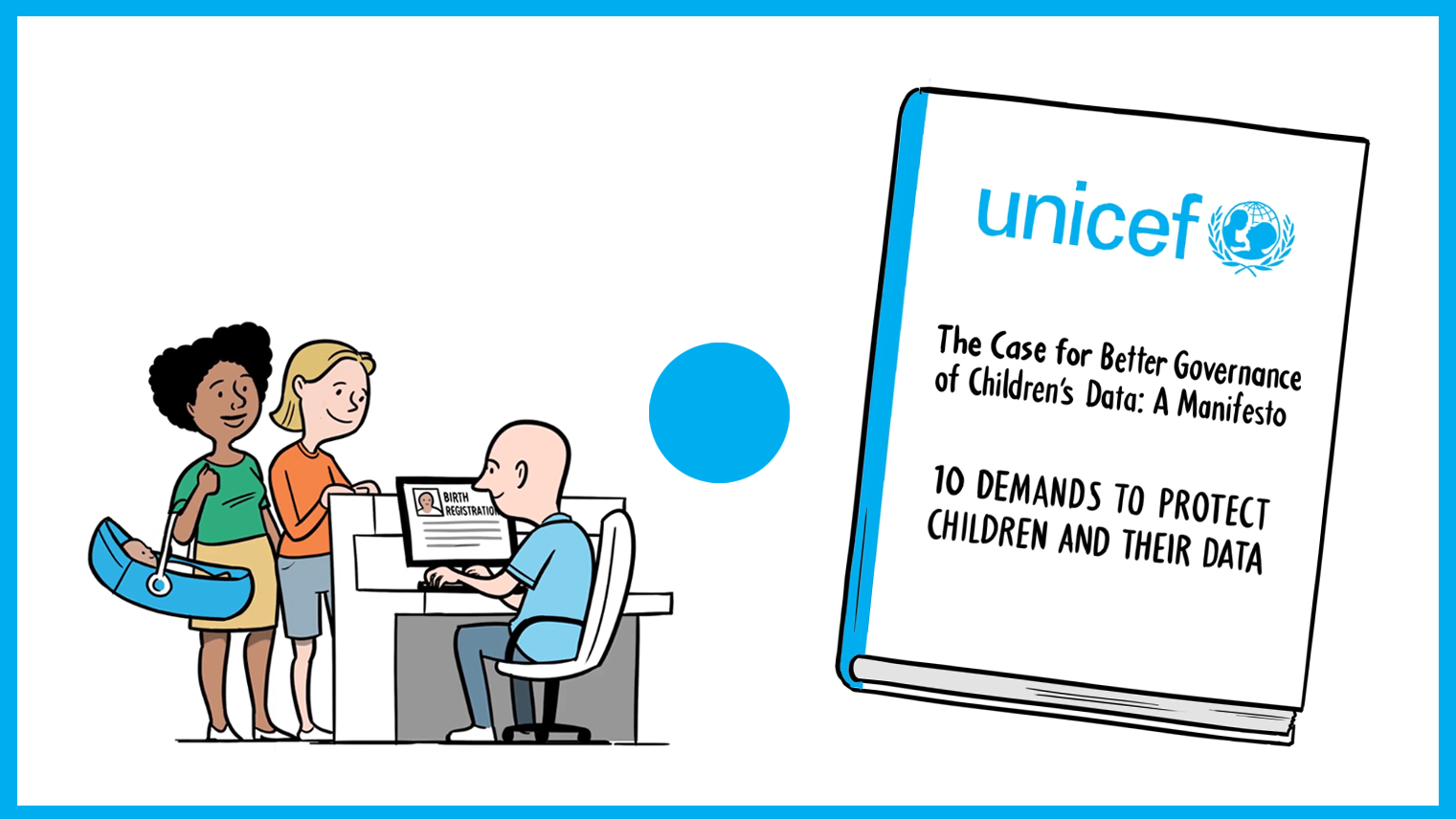
The Case for Better Governance of Children’s Data: A Manifesto (2021)

DADA-TATA artworks
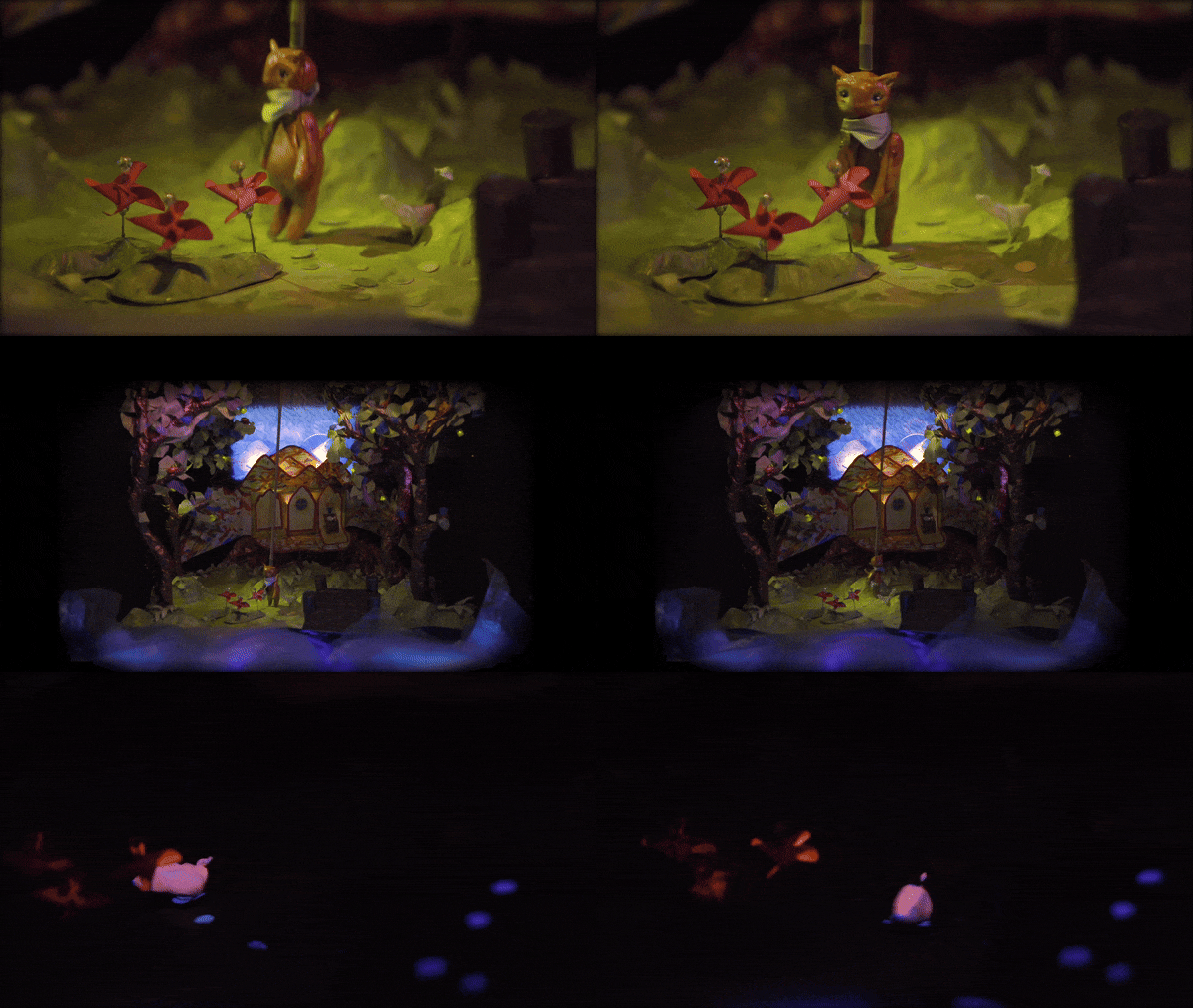
Track-track: Let’s follow the cat!
A hungry Andean cat travels to the coast to fish, unaware that he has some special followers.
Track-track: Let’s follow the cat! is a micro puppet show for children where the spectator’s biometric data animates elements of the scenography: to make the stars shine, blow the wind, and move the ocean waves. This project aims to explore children’s new digital environment and the concerns around biometric data and the notion of privacy. It investigates how children recognize themselves as a data source and perceive their own digital data as a resource. +See more
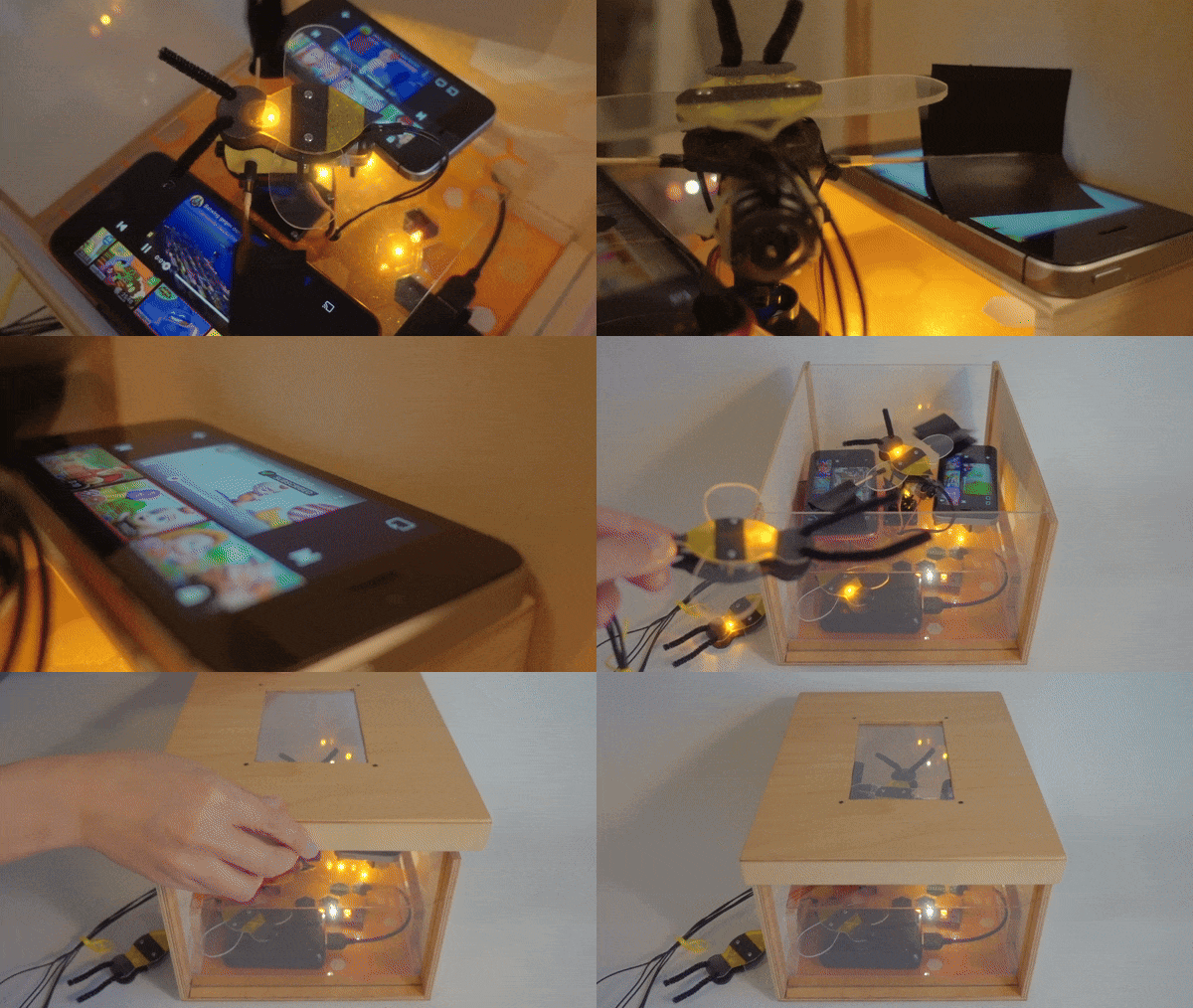
Beehive
This interactive installation for playgrounds explores how the big data sector, particularly YouTube, threatens children’s rights during their free time and play. By integrating sensors into playground elements, Beehive turns children’s movements into digital actions—scrolling, video playback on YouTube Kids app—transforming play into data. The artwork uses the metaphor of bees and honey production to aid children in better understanding data collection and processing. +See more
Board games
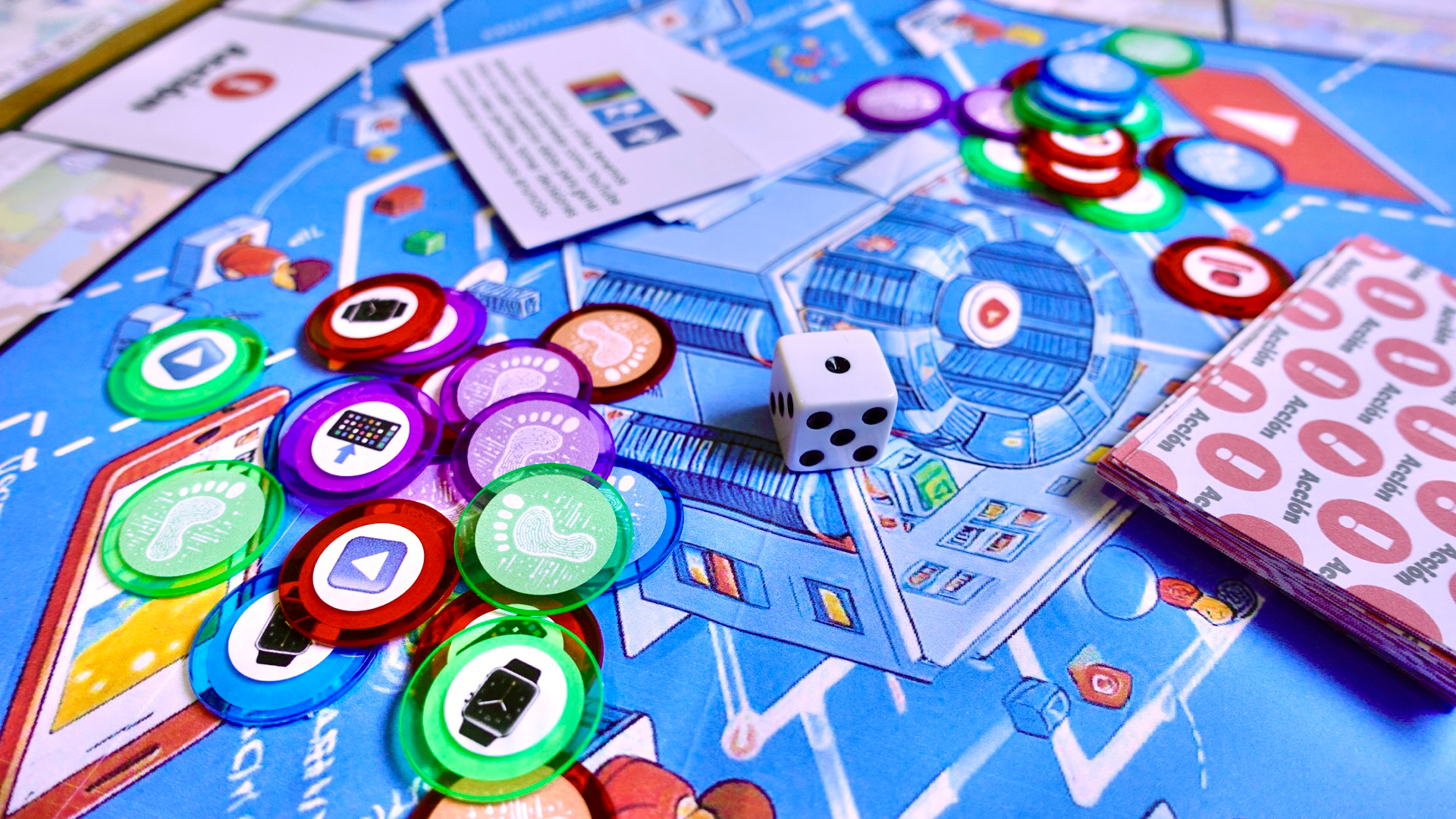
YouTrack Kids
Inspired by Monopoly, this board game helps children understand how apps like YouTube continuously collect their data. It also shows them the actions they can take to protect their information. Additionally, through informative cards, players gain insight into how the collection of personal data by apps affects their digital rights. +Read more

Guess the User
Inspired by the classic game Guess Who?, this board game challenges players to deduce a user’s digital profile based on limited data categories, such as devices, online habits, and preferred applications. Through gameplay, it fosters dialogue and critical reflection on digital footprints and data collection practices. +Read more
Activities
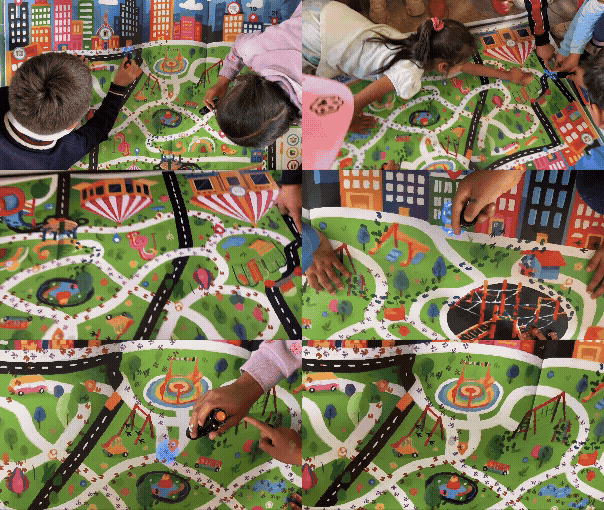
Fauna City
This is an offline data-literacy activity where children have to observe a map identify which animals live there, track their footprints, and uncover their activities. Through this exercise, children practice tracking and information-gathering skills while learning about the three types of data: data voluntarily provided by users, digital footprints, and inferred data. +Read more

My Privacy Spheres
This activity sheet is designed for children to identify their privacy spheres and reflect on the information they share. The main goal of the activity is to foster a dialogue between parents, children, and caregivers, encouraging the exchange of ideas and helping them define the boundaries of their privacy. +Read more

(Workshop’s original name in Spanish).
Workshop My digital rights
This workshop aims to raise awareness and promote children’s rights in the digital environment. Through playful activities such as board games and interactive art, participants learn essential concepts for safe internet usage and online privacy protection.
DADA-TATA actions
School visits
Collaborating with the art teacher
Track-track: Let's follow the cat! micro puppet show also visits school. In this first experience (Paris, May 2023), Sasaki was invited to be part of the school's art activities. While Sasaki performed the puppet show, the art teacher and the students created a collective diorama inspired by the puppet box's landscapes and animation mechanisms. This participatory artwork includes the creation of a video animation.
Likewise, the children created their own diorama. The backward is empty so that they could use a tablet screen as the background. The children recorded a video with the art teacher that would complement the diorama landscape.
(Children 6-8 years old)
Collective diorama created by the students. The elements in the sky can be animated and move.

Individual dioramas created by the students.
Child’s diorama with the video as background (video documentation provided by the art teacher).
Puppet show’s short film screening
After watching Track-track: Let's follow the cat! micro puppet show video recording, children can peep the box and see a tiny part of the performance and try the sensors. Afterward, we do a Q&A, and the children have time to draw their experience with the puppet show.
(Children 5-6 years old)


Kindergarten visits
“Playing with the camera” Kamishibai storytelling
The story seeks to teach children to recognize their feelings and identify how they feel when they like something or not. In this case, the story revolves around a camera, the filters, and one’s picture. After the storytelling, the children shared their thoughts. Some childrens comments (5 years old children):
“I like to have my picture taken, but only if they take it in the way I want.”
“I wanted to do a Tik Tok. My mom put a filter, but as I told her.”


“Playing with the camera” is based on the original story developed by SaferInternet.at. DADA-TATA, in collaboration with Umachaki (Peru), translated and adapted the story to the local context.
Workshops for parents

In collaboration with Umachaki (Peru), we developed the workshop “The internet is not a babysitter” based on the SaferInternet.at manual.
During this short workshop, parents reflected on the use of the internet, screen time, and the importance of boredom for children’s creativity and imagination development.
Publications
Sasaki Otani, M. E. (2026). “Fauna City”: A data-literacy Activity for Introducing Children to Digital Footprints and Data Types. Proceedings of the 25th Annual ACM Interaction Design and Children Conference, 1273–1276. https://doi.org/10.1145/3773077.3813767
Sasaki Otani, M. E., & León Kanashiro, L. (2026). Social Proximity and Data Sensitivity: An Exploratory Study of Children’s Privacy Spheres Configurations in Urban and Rural Peru. Proceedings of the 25th Annual ACM Interaction Design and Children Conference, 909–915. https://doi.org/10.1145/3773077.3812140
Sasaki Otani, M. E. (2025). “We Have to Report that App”: Reflecting on Children’s Data Collection and their Digital Rights through the YouTrack Kids Board Game. Proceedings of the 24th Interaction Design and Children, 743–747. https://doi.org/10.1145/3713043.3731474
Sasaki Otani, M. E. (2025). “Guess the User?”: A Board Game Approach to Children’s Digital Privacy Rights and Data Awareness. Proceedings of the 24th Interaction Design and Children, 748–751. https://doi.org/10.1145/3713043.3731475
Sasaki Otani, M. E. (2024). “Beehive” Interactive Installation for Playgrounds: Reflecting on Children’s Rights in the Context of Big Data Industry. Proceedings of the 23rd Annual ACM Interaction Design and Children Conference, 969–972. https://doi.org/10.1145/3628516.3661163
Sasaki Otani, M. E. (2022). “Track-track: Let’s follow the cat!” Reflecting on children’s biometric data processing through a micro puppet show. Interaction Design and Children, 629–632. https://doi.org/10.1145/3501712.3535275 ★Best Demo
DADA-TATA research poster

DADA-TATA project is developed by Nomi Sasaki as PhD candidate at the University of Art Linz in collaboration with the Zurich University of the Arts
Commodo cursus magna, vel scelerisque nisl consectetur et. Donec id elit non mi porta gravida at eget metus.